Duck report

One of my ducks started another nest of eggs, near the busy MLK street side of my garden. She pulled out a bunch of soft downy feathers and settled in right next to the chain link fence. I thought: good luck with that. Periodically eggs would roll from the nest under the fence to the sidewalk. I watched a few passersby pause, look at this greenish egg rolling around with the ubiquitous Dorito bags, and then gently push the egg back into the nest.
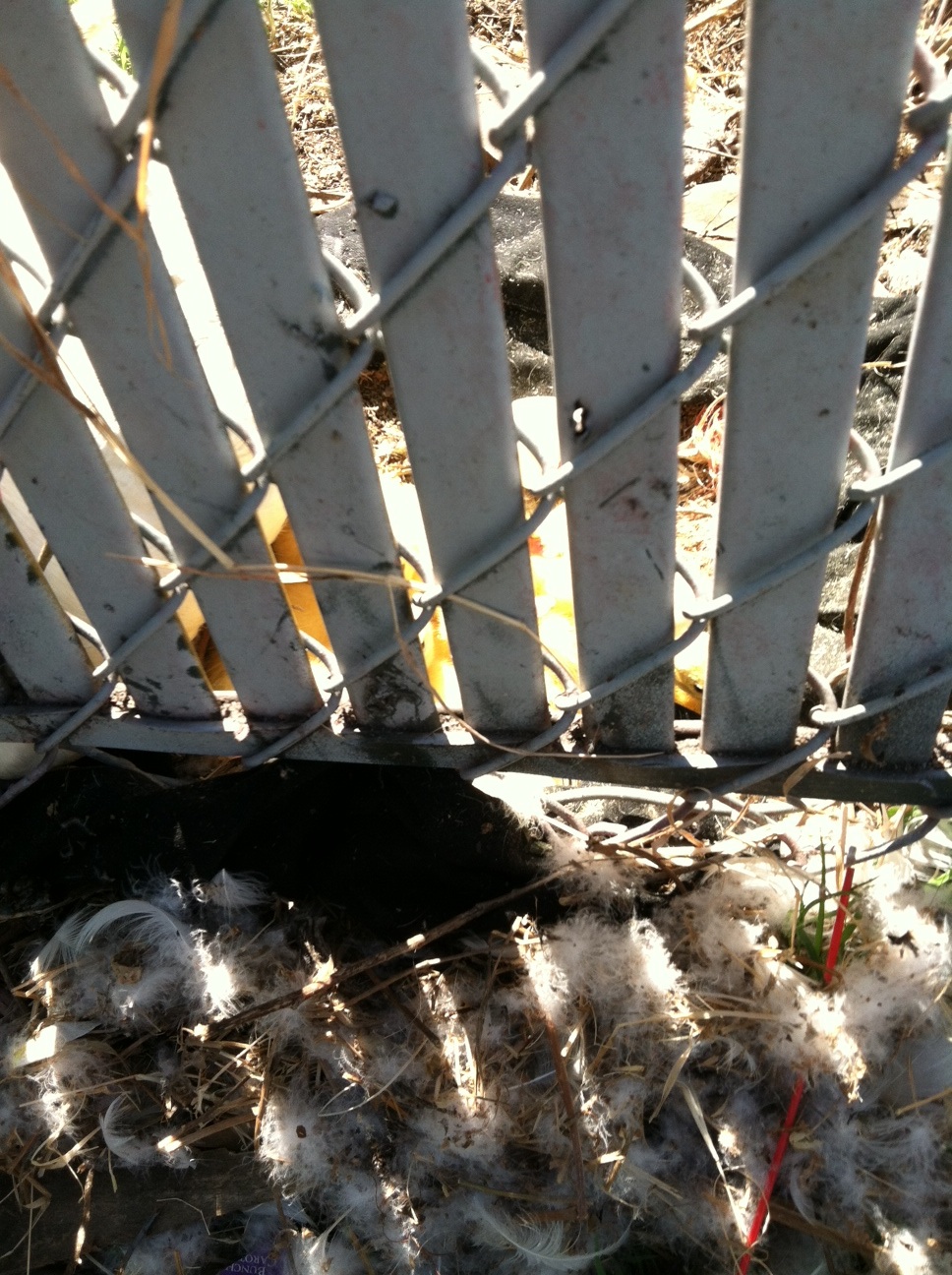
So it’s through a community effort that these ducklings finally hatched.
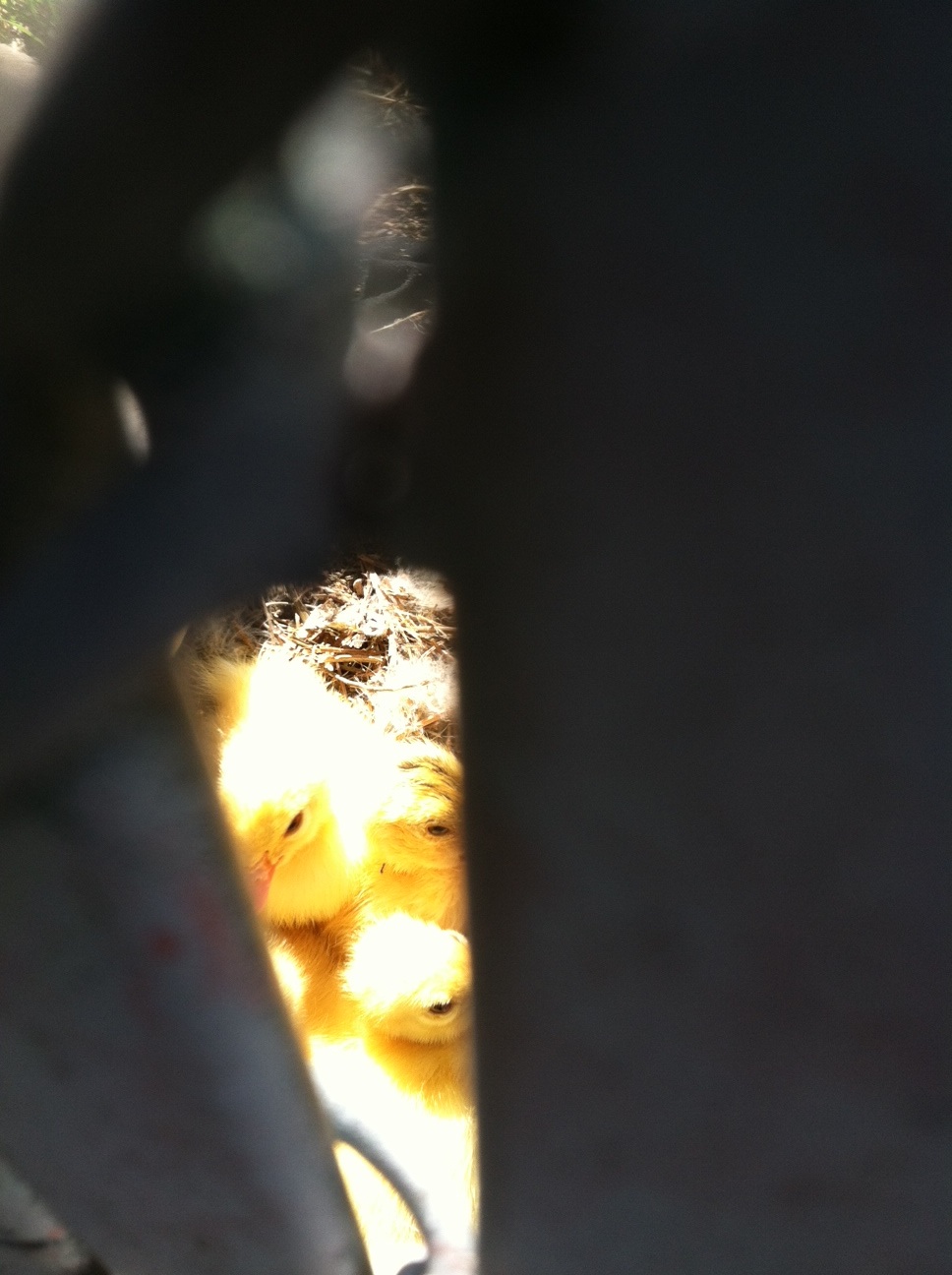
They are certainly adorable. But then they grow up. What’s a girl to do that has a pending permit from the City of Oakland that says: “No slaughtering or butchering of animals allowed?”

With previous hatches, I had been lucky and bartered with people–they got ducklings, I got some produce. But a few duckies did stick around and they grew up, and I had some big ducks on my hands. I figured it would be pretty easy to find a slaughterhouse. Nope. One place I called said they don’t process ducks, just chickens. Another said they had a 100 duck minimum. Finally I found a place in Manteca that would process my measly 8 ducks. Manteca is an hour’s drive away. To process 8 ducks, it would cost $80 ($10/duck). The paradox that I could buy a cooked duck from Chinatown for less than $10 was not lost on me. Still, I went. I didn’t have many other options.

The trip to Manteca was actually kind of fun because my friend D came along, and of course so did Billy and baby Francis. The slaughterhouse was a real mom and pop affair, not the nightmare PETA video places that I imagine when I think slaughterhouse. They did an outstanding, quick, clean job with the ducks. Much faster than I would, and less painful–my fingers really get weary trying to get all those pin feathers. Although $10/duck seemed high, I realized that if someone had walked up to me and said, “i’ll do that for $10,” I do believe I would have gladly handed them the duck.

The money’s spent, the fuel burned, I’m not mad about it. But I do wonder how this Oakland no slaughter law will work for someone with no car and no cash.
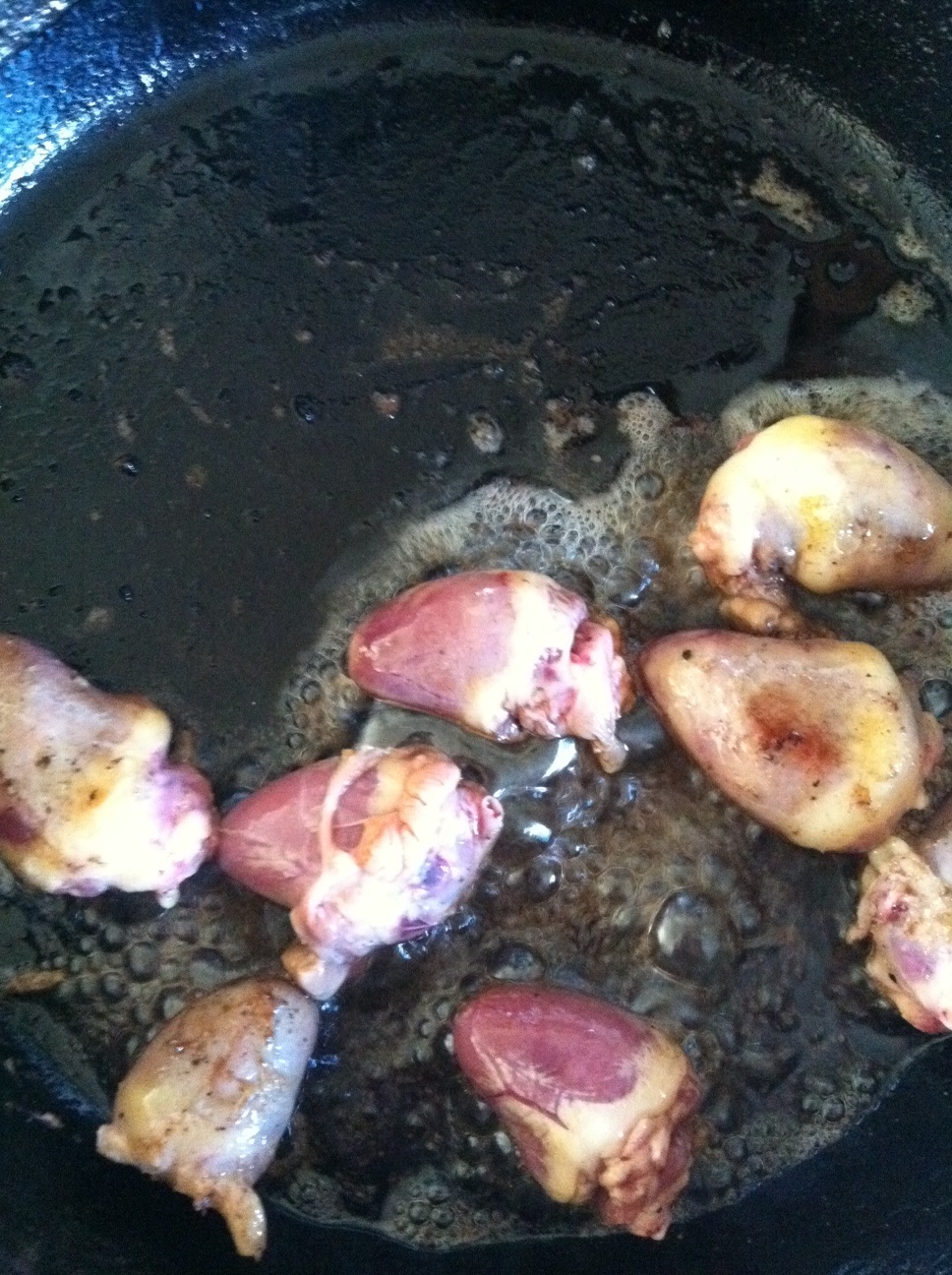
We’ll see how this batch of ducklings turn out. I’ve made a couple barters with folks to trade ducklings for things like eggs or tomatoes. Contact me (novella.carpenter@gmail.com) if you want to do this with this hatch…
Why I Eat Meat

Don’t ask me how I had time, but when the NYTimes ethicist sponsored a writing contest on “Why I Eat Meat”, I felt compelled to enter. I think about this kind of thing all the time. Of course I didn’t “win” the contest. No one even contacted me to say “Thanks but no thanks.” They are busy. I understand. So here’s my essay:

Why I Eat Meat
Last week, someone broke into my backyard and scrawled on my shed, “Don’t Kill Animals—they are our equals.” I’m an urban farmer in Oakland, well-known for raising turkeys, rabbits, goats, ducks, even pigs in my backyard and lot farm near downtown. As a city farmer, I’m used to rubbing elbows—and getting into heated arguments—with vegans and vegetarians. These meat-avoiders don’t want to kill animals. They love animals. Things is, so do I: I love animals and I love to eat them.
The words of a psychopath? In this burgeoning world of designer dogs, pet daycare, and the House Rabbit Society: maybe. But in a world where there is a working relationship between man and beast, no. Increasingly, this world is disappearing; the working animal replaced by pets that are treated like humans.
I read the words again as my dairy goats thoughtfully chewed their cud, a chicken clucked the arrival of an egg, and the meat ducks splashed nearby. Here’s the deal: I feed my ducks and give them shelter—they in turn lay eggs, build nests, and hatch out ducklings. I feed the ducks bugs and excess produce from the garden—and their manure then goes to grow more vegetables. I cull the offspring—process them into delicious roast duck. It’s a cycle. This cycle, this closeness is what I love about farming—and eating meat. It nudges us to think about our role in the cosmos—that one day we too will be food, if only worm food.
Another cycle: my dairy goats. They are bred (which they seem very happy about doing), have offspring which stimulates their milk production. I take some of the milk to drink, and to make cheese and yogurt. The female offspring are retained or sold, the male offspring are processed into meat. I’ve had a Yemeni storekeeper from down the street help me slaughter a young buckling. It involved a prayer and a song. It was, literally, a sacrifice—sacred. I split the goat with the storekeeper who was keen to get the intestines, heart, stomach. His wife would cook their traditional meals with the goat meat; I would make a delicious stew. Nothing was wasted.
Let’s say I took the advice of the graffiti artist to not kill animals, and if everyone else did too—what would that world look like? On my farm, that would mean the ducks would breed infinitely, they would overpopulate the garden, ravage the vegetables and make too much manure; and the young goat buck would grow into an increasingly smelly and feisty beast, making the milk of the does taste foul.
And if proceed to the logical endpoint of a vegan world where we ate tempeh or petri dish grown “meat”: there would be no working animals. No pigs, with their joyous rutting; no chickens scratching for worms; no goats capering. Sure, maybe a vegan utopia would spring up and host a series of “farms” complete with geriatric cows and wizened turkeys, living far beyond their natural lifespan. But would this farm allow for reproduction, a natural process that all animals strive for? What about sick animals?
In the end, domesticated animals are not our equals, they are our creation. We have to take responsibility for them. I do so gladly. I enjoy the antics of the ducks and the goats–of feeding them well so they will then feed me well. I love living in a world filled with animals that remind us that we are part of the cycle, that one day we too will die.

Ducklings

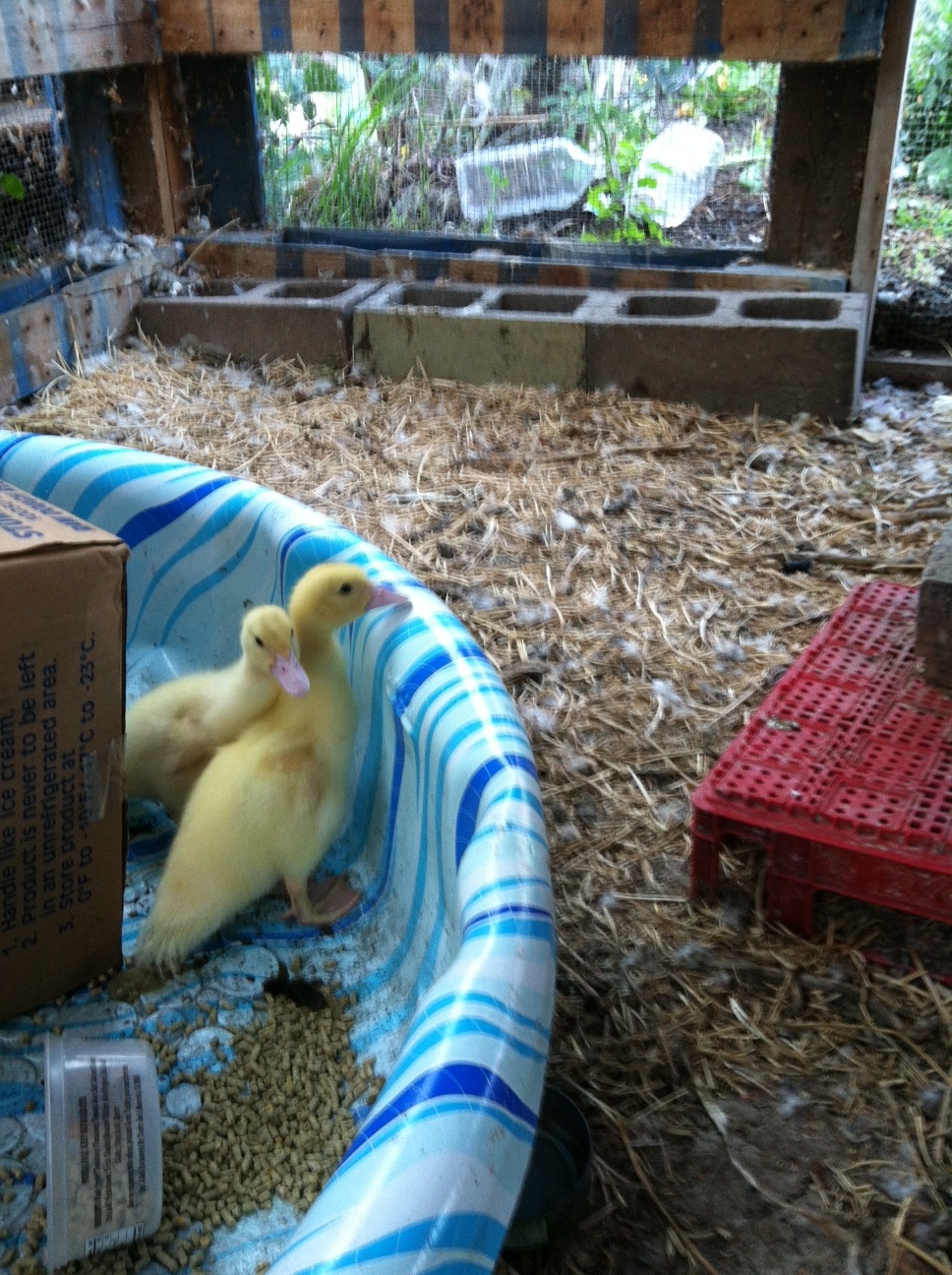
Oh ghod, wouldn’t you know that when I’m hoping to wind down the farm, the ducks are hatching out another plan.

Every year, I give the teachers at Washington Elementary some fertile duck eggs. It’s a really cool class project, where they hatch out the ducklings and the kids learn about science and life. This year, two separate classes did the project. Of the 10 eggs total given, 5 hatched. One of the teachers was really brave and conducted an autopsy on one of the unhatched eggs. I heard the smell was incredible. The kids sat far, far away. Teach’ figured out the eggs had gestated for 14 days, then stopped developing.

The five that kept developing and eventually hatched out imprinted on the school kids. But with school letting out, they had to leave the classroom. So now the ducklings are back at my place. Yes, Virginia, I am going to eat them. I only have so much space…Don’t worry City of Oakland, I’m taking them up to a USDA slaughterhouse….

Actually, my plan is to get rid of the ducks entirely. Which is why I was chagrined when my neighbor came up to me yesterday and said, “The ducklings hatched!” I thought he was talking about the school ducklings, and nodded my head. “I counted 13,” he said. Oh god. I ran back to the duck area and checked, yep, one of the sneaky girls hatched out a whole nest of them. Lucky number 13. Sometimes, nature has other plans. Anyone want to trade (something, anything) for some Muscovey ducklings?

End of the Season

It’s May–harvest time. Months ago I planted carrots, garlic, potatoes, peas, fava beans. Now it’s time to pull them out and cover up the beds for the fallow season. I know it’s weird–just as everyone is planting out their tomato starts and cuc seeds for a summer garden explosion, I’m reining her in. Believe me, I wish I could have a big summer garden. But I’ve taken over paying the water bill now–and it’s huge.

How did a renter get stuck with the water bill? My landlord for our apartment, which also has the hose bib I use to water the garden, has gone missing in action, and EBMUD turned off our water. I turned it back on and put the bill in my name. So far, every two months the garden uses about $75 worth of water–a lot, especially when it’s been raining and I haven’t had to water much. Imagine the July bill!

So, just like last year, I’m going to give the garden a summer break. Yesterday, I harvested all the fava beans. And I just started pulling up the first of the carrots.


By June, when the rains have ceased, I’ll harvest the rest of the carrots, the potatoes, let the garlic dry up and then yank it. By July the only thing I’ll need to water are the fruit trees. I’ll cover everything with mulch or burlap bags.


I am dry farming a few early girl tomatoes and some russet potatoes. By the duck drinking area, I’ll probably pop in one cucumber plant which will drink up all that spilt water. I’ll be going to the farmer’s market for everything else–glad to support them, while I take a wee break and try to finish my next book….

Later Goaters

I woke up at the crack this morning (not usual what with a newborn, but she was fast asleep) to the sound of a bleating goat. This wouldn’t be unusual except that I gave my goats away some weeks ago.

I feel like I might be letting people down in admitting this but I just could not stay on top of the goats and the baby. When Francis would cry, the goats would hear and began crying. I would be sitting there in my LazyBoy, trying to settle Franny down and I would imagine how I would just open up the gate and let the goats free. Some days I would forget if I fed the goats or not. When I did, I would invariably be carrying the baby while I threw them a chunk of hay, and it would get all over Franny. Forget about mucking out the goat area. I just couldn’t do both–care for goats and a baby. I had to choose. Of course I chose Francis.

I remember I used to read this one farmgirl’s blog a few years ago. I loved it, she was really sarcastic and funny, then one day her posts changed. She kept talking about her bun in the oven, not about funny things that happened on the farm. Then the baby came, and I stopped reading her blog. I felt betrayed, annoyed, BORED. I hope none of you feel that way, but I understand if so.

I remember asking my sister if having a baby was like having livestock. I can report that it is, but 20 times more time consuming and identity modifying. I was lucky that I have a great community of goaters, and Bebe and Gretel went to good homes, where they are happy and loved.

Speaking of which, this Saturday, at Market Hall on College Avenue in Oakland:
The Oakland’s Havenscourt Homestead’s Nigerian Dwarf Goat Petting Zoo is available from noon to 4:00 p.m.
and
Willow and I will be there too, doing a honey extraction demo from 1-2, followed by a panel discussion and signing our new book, “The Essential Urban Farmer.” Margo True, Sunset Magazine Food Editor and editor of Sunset’s popular book, “The One-Block Feast,” will moderate.

Also, Sunday at noon, I’ll be at Jack London Square Farmers’ Market doing a little soft shoe.

As for the nickering sounds, I leaned in to Francis, and realized it was her, snoring.

So much love

Bringing a baby into the world makes you realize how important your community is. For company on those long days of breastfeeding, for homemade meals when you feel like boiling water for tea is nearly impossible, for gifts that remind you that this is a good world.

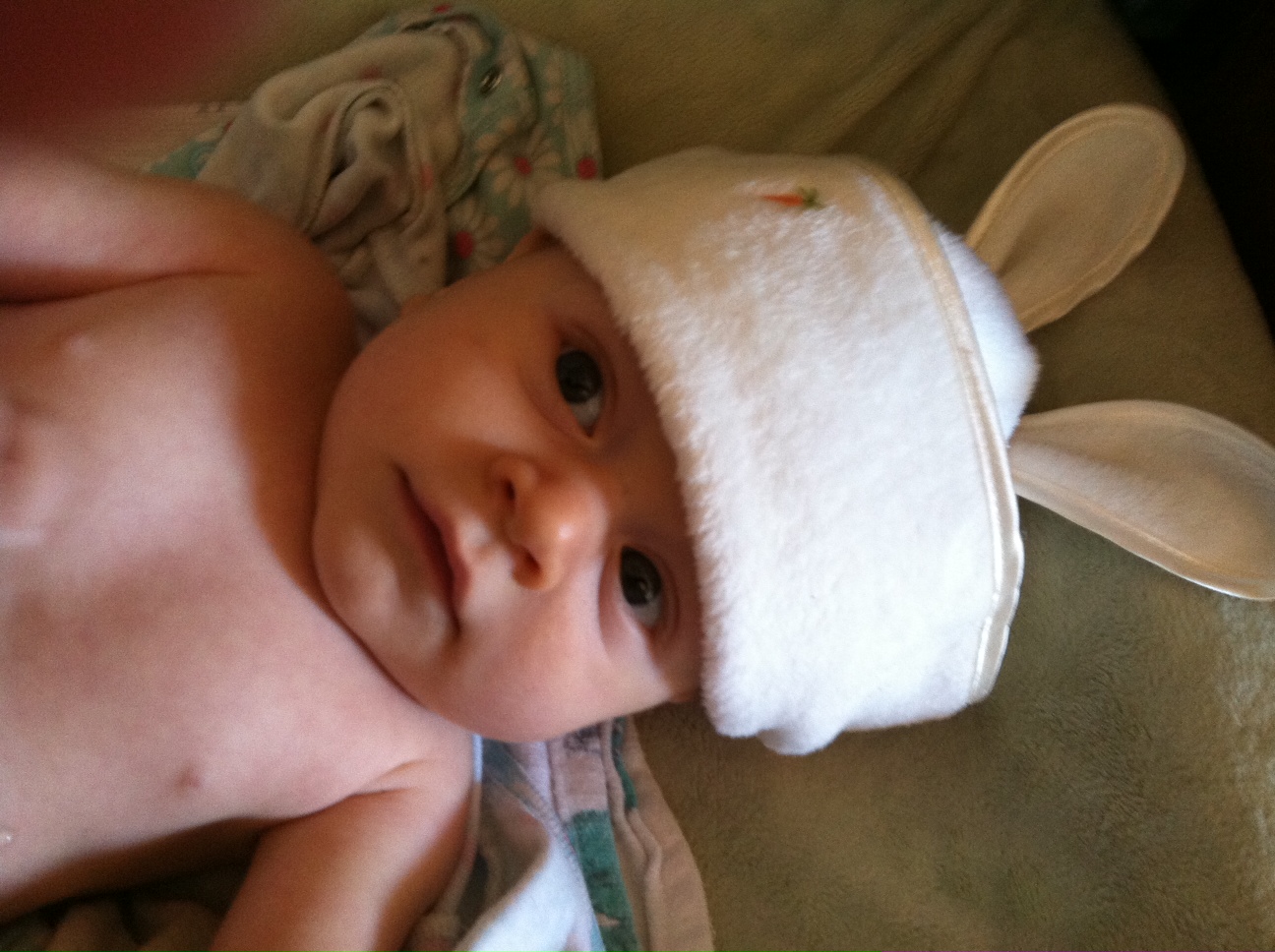
We’ve had several visitors every day since our daughter, Francis Cabell Amanita Jacobs, was born, including Moses from Brothers Market–his wife made this amazing Yemeni bread; Francis the metal collector; dear friends bearing meals of soup and brisket, shepherds pie, beer, arepas. Thanks guys!!

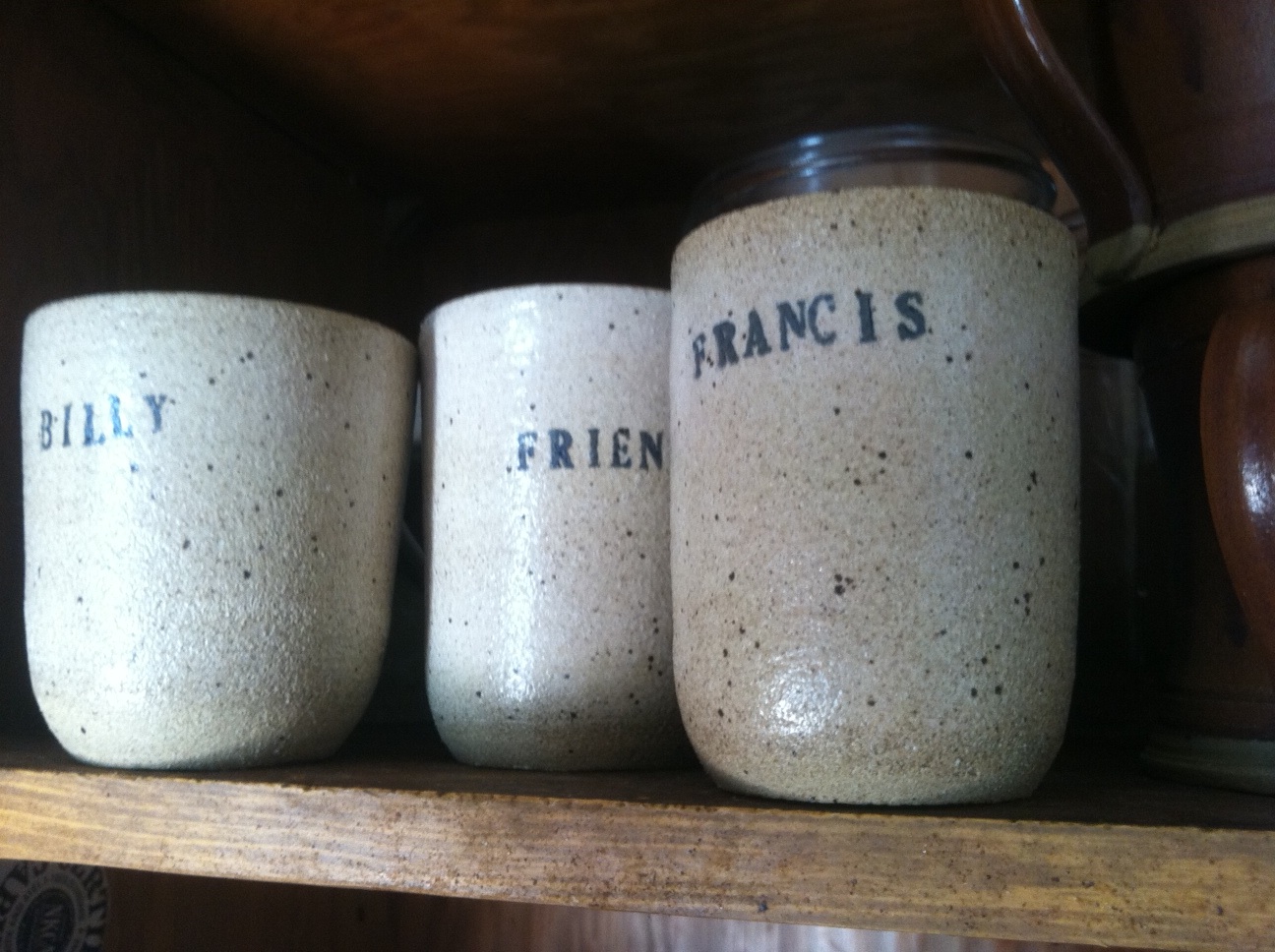
One of my favorite gifts came from Sadie and Emma, two talented potters.They made these drinking cups–one for Francis, Billy, Novella, and Friend. So cute.

Cheers to hand-made pottery and good friends. And Happy Spring!!