We All Live in the Ghetto Now

Yes, it’s all doom and gloom out there. Since we Americans live in an economy, not so much of a culture, it often feels like our entire way of life is crumbling as the stock market crashes and banks struggle.
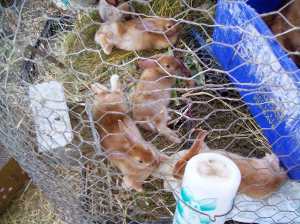
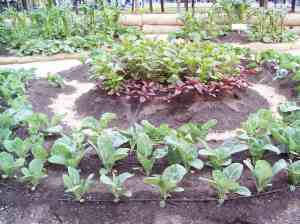
People point out that I don’t need to worry because I have a garden and farm animals. It’s true that I recently started selling my eggs ($5/dozen) and sometimes sell a rabbit or two. That money goes toward buying things I can’t make, like parmasean cheese, beef, bananas, and french bread (thank you French guys at Oakland Farmer’s Market!) But of course, I’m not immune to the trials of the economy, as I watch friends lose their jobs and their homes, I realize how fragile our society is.
Last weekend I went to a Long Now event and saw doomsday-er Dmitri Orlov speak about what happened when the Soviet Union fell. The winners were the ones who could adjust and adapt quickly. Orlov lists the most important things for people to worry about during collapse: food, shelter, transportation, security. I was surprised that all of the descriptions of food post-collapse involved growing your own food, allowing animal husbandry in cities, even planting wheat on college campuses (after their endowments become worthless). If Orlov had spoken even two months earlier, I’m sure there would have been a lot of eye-rolling in the audience. People were on the edges of their seats. Including me, I found myself slapping my forehead about the wheat growing in Memorial Glade. Genius! Timing, for doomsday predictors, is everything.
Funny thing, though, here in the ghetto where everyone is poor, no one is grumbling about the economic crisis. It made me realize that for as long as this crisis goes on, we’re all going to be living in the ghetto. We’re going to have to forage, scrimp. Many of us may chose to do things that are considered illegal (selling drugs, selling rabbit meat). We’ll start sharing living space with our friends and families. We’ll spend more time chatting on the corners (no jobs to go to). And, I predict more and more people will arm themselves.
For awhile, I was sort of gleeful about the downturn, but lately I’ve recognized that it’s fun to choose to do all these self-sufficiency things, maybe it won’t be so if it’s forced on us.

P.S. Farm Tour Saturday, March 7. 10am
Farm Tour: Sunday, Feb 15 CANCELED

Sorry!! But it’s mudsville here. I’ll resked for March…

Okay peps, because of popular demand, let’s do a farm tour Sunday, Feburary 15 at 10am. Maybe we’ll do some grafting and seed sowing…

GT Farm is at 665 28th street, at MLK in oaklandia. Rain cancels!

And in other news, my friend Heather is selling her awesome house in Gainsville, Florida. There is already a chicken coop and fruit trees. Check it out: http://gainesville.craigslist.org/reb/1006372691.html

Tanning hides

Sorry most of my posts lately have been all about events and actions, not necessarily deep thoughts about urban farming or poetic day in the life portraits of GhostTown Farm, but I’m feeling more action-y lately, so bear with me. Soon I’ll pull up the rocking chair and tell you some yarns. For now, here’s another potentially amazing upcoming event–please let me know if you are interested!

Though the wonderful auspices of UC Berkeley’s student group, SAFE, there’s a movement afoot to host a hide tanning workshop at GhostTown Farm. How appropriate. But this isn’t going to be some quickie session like the turkey-killing class, this involves a tw0-day commitment. And potentially camping in our lot. Or sleeping with the goats in the goat house. But I’m getting ahead of myself.

1. The class will be taught by Tamara Wilder, an absolute authority on primitive skills. Her business is called Paleotechnics, for Christ’s sake.

2. Remember how I said I have a million bunny hides in my freezer? Tamara said we can tan those. Each of the class attendees can have one of my million pelts to learn how to tan!

3. Remember my cool friend Jim who has goats? He said we can use on of his goat hides to practice tanning. For when we get bored of the rabbit.

3. There’s only room for 16 people

4. Tamara’s going to show up with all her tools (things like scrapping beams) and we 16 are giving her $100 EACH to take the class, which I said, spans two days.

5. This is not for the faint of heart. I’m imagining lots of dangling meat parts and stinky goo. And rubbing.

6. This will all go down either on April 11/12 or April 18/19. Do let me know which dates work best for you! But remember–it’s $100 and will span two days! If people want to stay the night or pitch a tent, I’m sure we can figure something out. There will be farm chores in the morning!

7. I am so excited to learn how to tan a hide!!

UPDATE 8. Please RSVP to agrofoodecology@gmail.com with subject line ‘Tanning’ and the best weekend for you (April 11 or April 18) so that they can pick the weekend with the most interest.

The scion exchange is coming, the scion exchange…

Bill likes to pronounce it “sky-on”. No, monkey, it is “sigh-on”.

Here’s the deal: every winter trees go dormant, they drop their leaves, their energy recesses into the trees roots and trunk. Because of this, it’s a good time to prune trees, to shape them, keep them short, keep them shapely. The twigs and sticks that you prune off your fruit tree can be called scions. Some genius figured out that you can take scion cuttings and graft them onto other trees. Usually you graft one kind of apple onto another kind of apple. For example, a granny smith scion cutting can be grafted onto an apple tree that usually makes galas. After a year or two, your apple tree makes galas *and* granny smiths! It’s a freaking miracle. You can graft pears, apples, apricots, persimmons, plums, peaches, mulberries, etc.

And this Saturday, Jan 17, will be the Golden Gate Rare Fruit Growers Scion Exchange. Last year was awesome, with lots of crazy rare varieties. I successfully grafted a fancy French pear scion onto my boring bartlett. If you have just one fruit tree, you don’t want to miss this event. Even if you don’t know how to graft, you can learn. Even if you don’t have a fruit tree, there are often vines and plants for sale as well. Remember: figs, kiwis and pomegranates can be simply rooted into the ground!

WHEN: 12 noon to 3:00 PM
Saturday, January 17, 2009

WHERE: UCSF Mission Center
1855 Folsom Street
San Francisco, CA

Bring ziplock bags, masking tape, and some pens to label the scions (believe me, you won’t remember what varieties you get, there are that many!). If you see a crazy slobbering lady with orange glasses, do me a favor: give me a slap and say howdy farmer!

Meat and Greet

There’s a meme going around, it’s called Meat and Greet. On January 10th, there’s a M and G at 2nd Street in Oakland for the latest incarnation of the Bay Area Meat CSA: http://bamcsa.pbwiki.com/.

The following day, January 11, MeatPaper magazine is hosting a Meat and Greet at the Acme Chophouse to celebrate their latest issue of the meat-y magazine. (I have an article in the mag about meat powered cars.) http://www.meatpaper.com/mailings/081229/index.html

I’m curious to see how both these organizations will address the issue of eating meat on a budget, or ask the question how we can eat less but better meat.

baconprepped

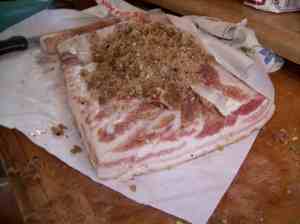
I’ll be doing two meat-related things on the farm this weekend. One is smoking the last of the pork bellies from the pigs we raised on dumpster scraps.

bunny

The other is finally harvesting the rabbits from the last litter. They are getting so big, I can barely afford to keep them fed (they eat greens from the dumpster and Templeton Rabbit Food which costs $25/bag). I figure that if I sold the rabbits, they would have to cost $25/rabbit just to recoup their feed costs. It’s part of the crunch of being a small-scale farmer. No matter how wiley I am by feeding the animals scraps and stale bread, they still need some feed to thrive. And feed is getting more and more expensive.

Which makes me know that meat should be more expensive than it is. And that we should probably eat less of it.

OPEN Restaurant

amaranthFood–it’s so boring.  I mean, yes, it should be delicious, and lovingly prepared. And plucked fresh from the earth. But with the economic crisis exploding around us, all of a sudden our (my) food geek tendencies seem a little trivial. During the fat years, we all had more time and money to natter on and on about what we were eating, and making food consumption into a meta experience. I remember checking out a book called Food Is Culture at the library at UC Berkeley, and the librarian couldn’t help himself when he snarled, “No, food is just food!”

Well, that’s one way to look at it. But. There’s a group of food world folks who know how to geek out on food in a way that isn’t annoying. They are called OPEN, a group of food professionals who host awesome events in the name of food. They aren’t caterers, mind you, but more like storytellers. For instance, they did an event at SFMOMA where they deconstructed a pig before the eyes of the eaters. After what sounded like an amazing porky dinner, everyone took home a bit of pancetta to cure at home. They sometimes make donuts in parks and give them away, for free.

Now they’re hosting an event at Yerba Buena that sounds really fun. Here’s the scoop, from the YB website: “Participants will share a simple meal while chewing on the question: How can the urban landscape be productive? …enjoy dinner and a glass of wine while learning more about urban farming, foraging and gleaning from people directly involved in these practices. Entry to discussion is open to everyone.

The menu includes a stew made of white beans, greens and pork (there will also be a vegetarian stew), pork rillette, dessert (not yet determined) and a glass of wine.”

I’m going to be there–I hope some of you can make it. Here’s more info:

YBCAlive!: OPENrestaurant with Slow Food Nation
Tue, Jan 6, 7pm • Grand Lobby
Meal Ticket is: $20 General / $15 YBCA Members
Discussion is FREE
For tickets, please call our Box Office at 415.978.2787.